Loneliness and substitute companionship
Maigret and the Dead GirlLoneliness and substitute companionship is a recurring social pattern in which a woman’s home becomes both refuge and a means of securing company. The arrangement offers young women a bed when they have nowhere else to go, yet the shelter can carry an unspoken price: dependence, gratitude, and service. Through Maigret’s observations of a protégée and his recollection of Elisabeth Coumar, the pattern emerges as neither simple charity nor straightforward exploitation, but an uneasy mixture of care and need.
Refuge and dependence
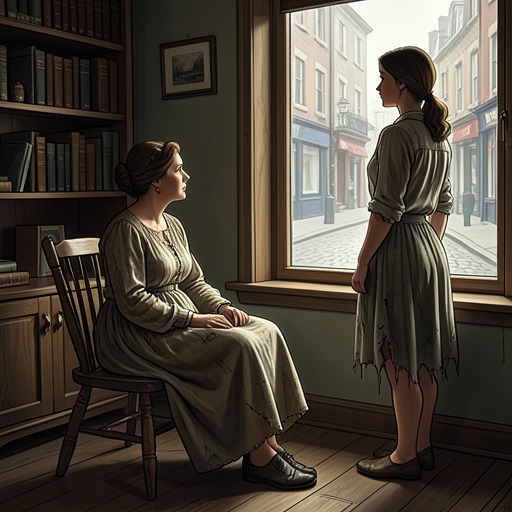
A girl appears at a woman’s home one evening without any established arrangement and stays. When Maigret asks whether she is a maid, the woman calls her a dependent instead; the distinction does not erase the striking imbalance between them. The girl moves with what the narration characterizes as the swift obedience of a slave. Her presence is not described as paid employment, but the language of obedience suggests that dependence has shaped the household relationship all the same.
The home is not a permanent refuge for a fixed group. The girls change from time to time, and the woman does not turn them out: they leave when they are able or choose to go. She takes them in when they are broke and have nowhere to sleep. The account allows for a modest, direct motive—to keep them from being left in the street—without claiming that this explains everything about the arrangement. A bed and shelter answer an immediate need, but the girls’ precariousness also makes them beholden to the person who provides them.
That double character matters. The woman’s help is concrete, not merely an appearance of benevolence: she offers accommodation to people without money or another place to stay. At the same time, the girl’s servile obedience makes visible how easily gratitude and vulnerability can become a kind of submission. The relationship is not reduced to a declared bargain; its imbalance is conveyed through the conditions of shelter and the girl’s manner within the household.
Company as an unstated purpose
Maigret’s recollection of Elisabeth Coumar, a dressmaker on Rue de Douai who took in homeless girls, gives the arrangement a wider context. He considers two possible explanations for her hospitality: kindness, and loneliness. The narration does not settle the question in favor of either one. Instead, the alternatives coexist, allowing generosity to be genuine while also serving the giver’s need for human company.
In Maigret’s recollection, the girls owe Elisabeth Coumar everything for a time and become, in effect, a kind of slave. The phrase marks the cost that may accompany rescue: the person who receives a bed is not necessarily free of obligations simply because no formal contract is mentioned. The care creates an intimate dependency, and that dependency can make the young lodger responsible for more than rent or household tasks. Companionship itself may be part of what is expected, even when it has not been stated as a condition.
The pattern is not presented as unique to one dressmaker. Maigret reflects on the widows and unmarried older women in Paris who take in lodgers partly to ensure company, preferably that of someone young and carefree. This observation shifts the focus from an isolated household to a recognizable arrangement: lodging provides security and presence at once. The older woman may be offering shelter, while the younger lodger supplies a form of daily companionship that the older woman would otherwise lack.
Madame Crêmieux and the limits of the arrangement
Maigret sees a similar structure in Madame Crêmieux’s lodgings. Her expectations make clear that a room is not the whole of what she wants from a lodger. She keeps to a strict routine, going to bed at half past ten, and a roomer who returns later risks an argument. She also wants someone to keep her company and play cards. The household therefore joins accommodation to the regulation of another person’s time: the lodger’s late return disrupts both the landlady’s routine and the companionship she seeks.
The resemblance to Elisabeth Coumar’s household does not make the two situations identical. Rather, Maigret uses the comparison to recognize a recurring motive beneath the practical business of renting a room. What looks like a straightforward lodging arrangement may also be an attempt to keep loneliness at bay. The wish for company is especially telling because it is directed toward someone young and carefree, whose presence can animate the older woman’s home but whose own needs and independence may be constrained by the arrangement.
What the pattern reveals
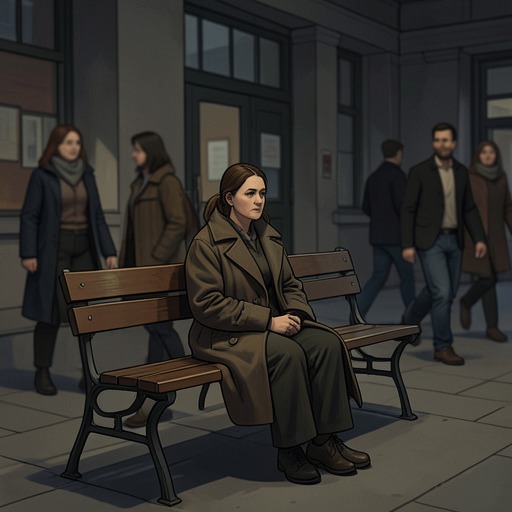
The circumstances surrounding Louise Laboine sharpen the distinction between having a roof and having a secure place in the world. The investigation notes that she had only one dress, apparently no regular employment, and gave little information about herself, her origins, or her family. Maigret asks what conclusion had been drawn from these absences, and the possibility raised is that she had run away from home. That remains a suspicion, not an established explanation. What is clear is that material scarcity and personal obscurity make a vulnerable young woman especially dependent on whoever will take her in.
The pattern of substitute companionship thus sits between protection and asymmetry. For the host, a lodger can relieve solitude through everyday presence and shared activities; for the lodger, the room can mean immediate safety when money and alternatives have run out. But the same dependence that makes the shelter valuable can narrow the younger woman’s freedom, while the host’s desire for company shapes the terms of life under that roof. Maigret’s comparisons make loneliness legible not through confession but through household arrangements: a bed offered, a routine imposed, a card game desired, and a young woman whose gratitude can become obedience.